Advertisement

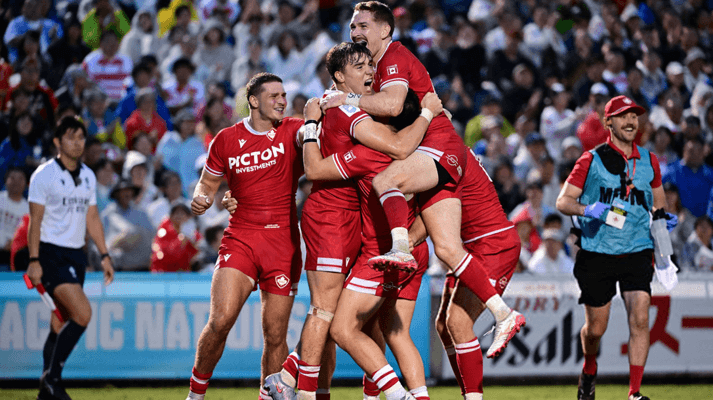


B. Lesage (9'), M. Flesch (16'), J. Kilgour (58')
Tries
F. Pifeleti (21')
T. McMullin (10', 59')
Conversions
L. Carty (22')
Penalties
L. Carty (38', 42', 71')
This one said more about control than sparkle. From the moment Canada landed the first punch, they managed the contest in the places that matter — at the cleanout, around the guard defenders, in how quickly they could get back on the ball. That was enough to shade a narrow game against a higher-ranked USA side still tinkering with its midfield and struggling to generate genuine tempo.
The upset wasn’t about volume of possession or some grand surge late on. It turned on early scoreboard leverage and a small, consistent edge in ruck efficiency. Ben LeSage’s ninth-minute finish, sparked by a sharp involvement from Cooper Coats, set the tone. The live ruck-speed snapshot in that first quarter had Canada producing a meaningful slice of 0–3 second ball while the Eagles were stuck in the 3–6 window and beyond. Playing from in front, Canada could kick when they wanted to, close the gate around the breakdown when they needed to, and dare the Eagles to build phases into a set defence.
That challenge exposed the Americans’ selection gamble. A debutant at 12 in Cassh Maluia meant new pictures for Ruben de Haas and Luke Carty in a channel that relies on instinct and timing. There were touches — Maluia carried willingly — but the cohesion wasn’t there. With the ball arriving slowly, de Haas often had to square up to a set line rather than play on top of it. The one try they did score through Faka'osi Pifeleti felt like a necessary dose of pragmatism: take the close-range chance when it’s there because the multi-phase stuff wasn’t bending Canada much.
Canada’s control was not absolute, just timely. Their cleaners arrived on time often enough to keep Coats on the front foot early, and their midfield defended with bite. Lucas Rumball and Mason Flesch were central to that contact picture — Rumball’s work rate around the corner and Flesch’s busy carrying game both mattered — and Jacob Ince stitched tackles in the 13 channel that stopped the Eagles getting outside the edge. When chances appeared, Canada took them: Flesch powered over to make it 12–0, and when the match tightened after the break, Jesse Kilgour supplied the only try of the second half to wrestle back the lead. Takoda McMullin hit two of three from the tee; in a three-point game, that’s the right side of fine margins.
The hinge points sit either side of half-time. After Canada’s early 12–0, the Eagles did drag it back through Carty’s boot and trailed by two at the break, then nicked the lead just after it. That could have become a momentum swing if the ruck speed picture had flipped. It didn’t. Canada absorbed, kicked to structure, and forced the Americans to go again. The Kilgour score on 58 minutes came as a reply to USA’s nudge in front and underlined the theme: when the gain line evened out, Canada were still the side more likely to produce a clean action in the red zone.
Credit to the USA pack for keeping the scrum honest and for winning more turnovers than Canada; this wasn’t a physical capitulation. But two issues capped their ceiling. First, the lineout: at sub-70% it denied them the set-piece launch they were clearly banking on — especially once Joe Taufete’e came on to tilt things toward maul pressure. Second, the lack of fluency at 10-12-13 blunted what turnover ball they did create. Tavite Lopeti added thrust off the bench, but he entered a one-score grind where each misfire meant another two minutes of exiting and tackling.
Does the margin flatter Canada? No. A three-point game with the Eagles within range in the last 10 accurately reflects the arm-wrestle we watched. If anything, it flatters neither: Canada left a conversion out there and offered USA field position with a double-digit penalty count; the Eagles, for their part, couldn’t turn their steals and territory into repeat entries because the lineout kept coughing and their phase ball lacked speed. Carty’s 11 points kept them alive; there just wasn’t a decisive strike to go with it.
For Canada, the takeaway is a repeatable blueprint against Tier-2 peers: start fast, win just enough collisions to keep the ruck clean, and let Coats manage the map while your defence does the heavy lifting. The warning is obvious too — after the bright start, their attack stalled for long stretches. Better sides than this reshuffled USA will force you to score again, not just survive. For the Eagles, the lesson is selection and detail. Settle the midfield, tidy the throwing and lift timing, and squeeze more quick ball out of the breakdown. The fight was there; the cohesion and speed weren’t. In Tokyo, that was the difference.


