Advertisement



V. Vakatawa (10'), T. Ikanivere (25')
Tries
M. Harada (21'), B. Gunter (57'), S. Tua (71')
C. Muntz (10')
Conversions
S. Greene (22')
I. Armstrong-Ravula (64')
Penalties
S. Greene (6')
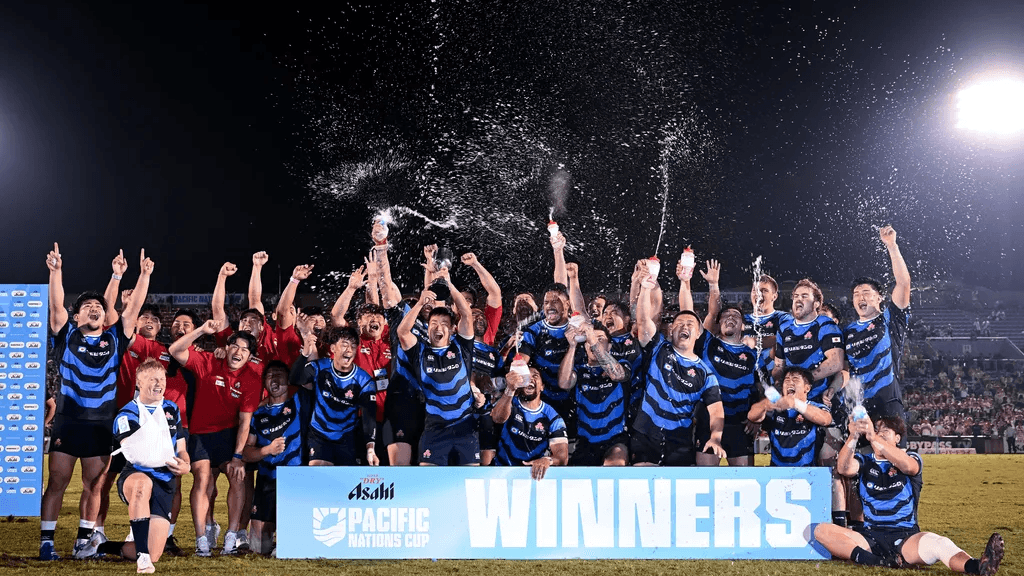
This was about nerve and know-how more than sparkle. After two straight finals lost to the same opponent, Japan came to Tokyo with Eddie Jones hammering “experience and toughness” and delivered exactly that. They didn’t out-Fiji Fiji; they out-lasted them. Possession, field position and composure under pressure counted for more than strike plays, and that was enough to crack a side that has had their number in this fixture.
The other truth: Fiji didn’t arrive as the same back-three they’d planned. Manasa Mataele’s matchday withdrawal and a selection week that shunted Isaiah Armstrong-Ravula to 15 left the backfield understanding a step off. In a final shaped by territory and exits, that matters. How much of Japan’s edge was design versus disruption is one for the post-match debriefs and verified detail, but the tone was set by continuity versus compromise. Japan kept faith with their semi-final core; Fiji were taping things together.
The numbers explain the shape as clearly as the scoreboard. Japan owned the ball, kept the lineout steady and conceded just five penalties. Fiji made 150 tackles and coughed up 14 penalties plus a yellow card. You can’t defend that long, that ill-disciplined, and expect to control a final.
CARRIES
CLEAN BREAKS
TACKLE
TACKLES MISSED
TURNOVERS WON
PENALTIES CONCEDED
YELLOW CARDS
POSSESSION
SCRUMS
LINEOUTS
Where it turned wasn’t a single play so much as an attitude shift. When Mesake Doge went to the bin on 18 minutes, Japan didn’t chase the miracle ball; they took the rucks they were owed, went through the phases and got a close-range finish from Mamori Harada to settle the noise. Even when Fiji still pinched a 12–10 lead at the break off Virimi Vakatawa and captain Tevita Ikanivere tries, Japan’s tempo never spiked. Naoto Saito guided them back to corners, and the forwards kept winning enough gain line to stay in Fiji’s half.
The second half was the payoff for that approach. Japan squeezed and waited for the seam. It came through Ben Gunter, whose engine defined their carrying effort all night; his try on 57 minutes was the product of pressure rather than invention. When Armstrong-Ravula levelled it at 15-all from the tee, Japan didn’t blink. The bench made the decisive imprint: Samisoni Tua, on since the half-hour, finished the game’s key moment on 71 minutes, the one attacking sequence in the last quarter that kept its shape.
Fiji will rue the areas that usually prop them up. The lineout misfired, and with it a lot of their launch. Their back row carried manfully — Elia Canakaivata and Motikiai Murray both emptied the tank defensively — but they were asked to make too many tackles and too many of them were scrambling. Ikanivere was immense in contact and got his try, yet 62% opponent possession eventually bends any captain’s plan. The late back-three reshuffle told on kick return and kick chase; with Armstrong-Ravula at fullback and Seta Tamanivalu drafted in late, the collective pictures weren’t as tidy as a final demands.
Japan won because they were pragmatic. Jones said before kick-off, “We’re banking on good experience and toughness to get us over the line in the final,” and that’s the tape: Saito’s game management, Gunter’s heavy carries, and a back three that didn’t overplay their hand. Sam Greene opened the ledger from the tee and added a conversion; small, early scores that keep a team’s plan on track. Out wide, Inoke Burua and Dylan Riley were happy taking metres without forcing the offload. Faulua Makisi offered the cleanest go-forward of the lot, 15 purposeful carries that softened the Fijian fringe without trying to solve the whole defence by himself.
It wasn’t perfect. With that much ball, 20 points is modest. Japan’s red-zone efficiency still isn’t ruthless, and one missed conversion left the door open in the final minutes. They also didn’t generate many clean breaks, which speaks to a lack of sharpness in shape once they’ve earned front-foot ball. But if the brief from Neil Hatley — “Winning the final at home is the absolute priority for us” — set the dial to outcome over aesthetics, then this was on brief. And crucially, the discipline held when the clock squeezed.
Does the margin flatter either side? Not really. Fiji were one play from flipping it back at 15-all, but Japan had spent an hour building the platform to take the next punch and still be standing. Fiji’s two first-half tries show they still carry a threat Japan respect; the problem was mounting pressure on exits and set piece, not a lack of cutting edge. This wasn’t a blowout disguised as a nail-biter; it was a genuine arm-wrestle that the more settled side edged.
The takeaways are clean. Japan leave with a trophy and, more importantly, a clear identity under stress: keep the ball, be patient, punish ill-discipline. The next step is upgrading the finish when they get into the 22. Fiji leave knowing their floor is still high — they were right there despite the reshuffle — but they cannot hand over that much possession and expect the habitual magic to save them. A settled back three, tidier lineout and fewer whistles, and the three-peat chase would have looked very different. In Tokyo, continuity beat chaos.


